
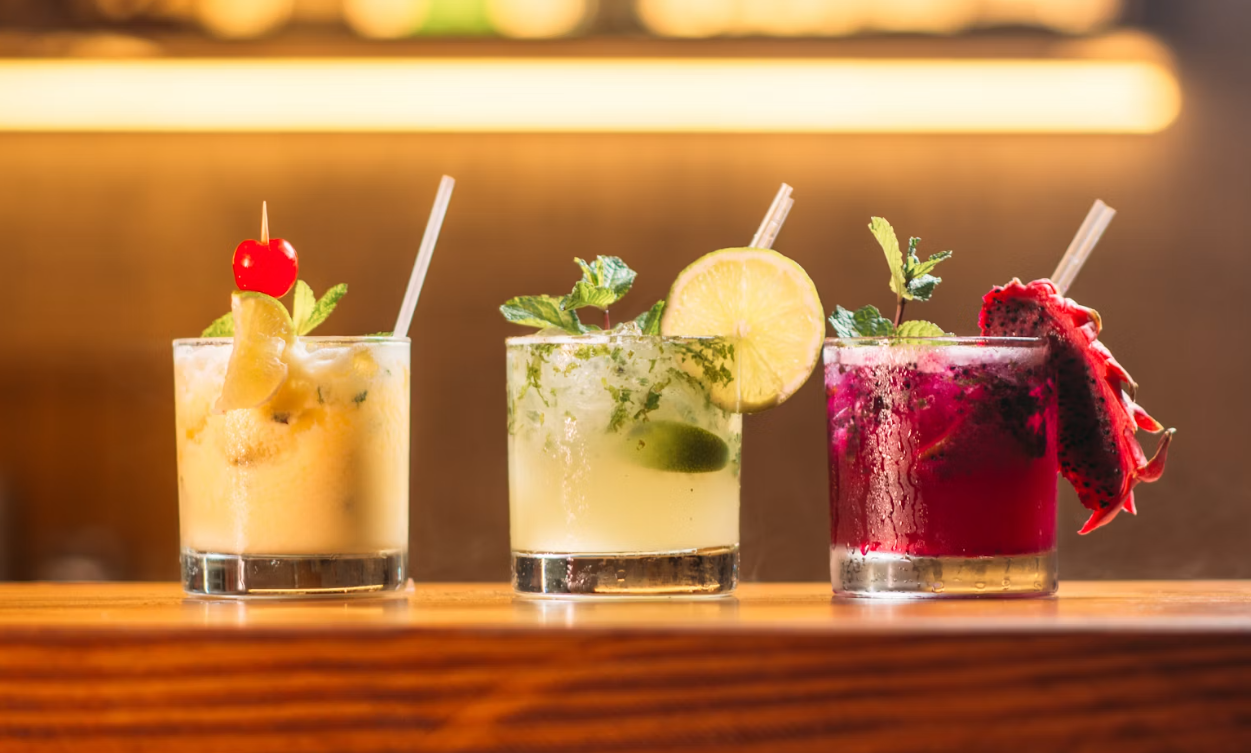
Cocktails tell you a lot about a place. The ingredients people reach for, the way they drink, the time of day they start — all of it reflects something real about how a culture thinks about pleasure, hospitality, and slowing down. Travel long enough and you start collecting these moments: a negroni on a Florentine terrace at six in the evening, a pisco sour in a Lima bar so old the walls are slightly sticky, a gin and tonic poured in a balloon glass the size of your head somewhere in Madrid.
The world has never had a shortage of great drinking traditions. What changes is what you notice when you’re actually paying attention.
The Classics: Europe’s Long Game
Italy didn’t invent the aperitivo hour, but it perfected the idea that drinking before dinner should be its own event. The Campari-heavy bitterness of a spritz or negroni isn’t accidental — it’s designed to open the appetite, to pace the evening, to make the meal that follows feel earned. This is cocktail culture as ritual rather than spectacle.
Spain took gin and transformed it. The gin tonic — written without the “and” in Spanish, which tells you how seriously they take it — is served with enormous glassware, artisan tonics, and a garnish chosen to match the botanical profile of whatever gin you’ve ordered. It sounds pretentious. In practice, it’s just thoughtful.
The UK’s cocktail scene took a while to find its confidence, but London bars now sit comfortably alongside the best anywhere. There’s a particular pleasure in watching British mixologists apply the same precision they’ve always brought to whisky to gin, rum, and everything in between.
The Americas: Where Rules Get Broken
South America’s contribution to cocktail culture is underrated. Peru and Chile spend considerable energy arguing about who owns the pisco sour, but the real story is that both countries ended up with something genuinely irreplaceable: sharp, citrus-forward, slightly frothy, built for altitude and heat. Brazil went its own way entirely with the caipirinha — cachaça, lime, sugar, ice, and nothing else, which is how you know it’s confident.
Mexico’s mezcal bars have quietly become some of the best drinking destinations on earth. The spirit itself is complicated — smoky, agricultural, specific to its region and producer in a way that tequila largely abandoned decades ago. Walking into a mezcal bar in Oaxaca and working through a flight with a knowledgeable barman is its own form of travel education.
The United States has a cocktail culture so varied it barely counts as one thing. New Orleans alone could fill this list. New York gave the world the Manhattan and the dry martini. Portland and San Francisco pushed the fermentation-forward, low-ABV direction that a lot of bars are still chasing. And if you want to understand how much creative energy Americans put into cocktails, look at the sheer number of regional recipes that have never made it onto any international menu but are completely beloved in the towns where they were invented.
Las Vegas: Excess With Ambition
Las Vegas deserves its own entry, not because of its size but because of the specific kind of cocktail ambition it generates. The Strip’s best bar programmes are serious operations — celebrity bartenders, deep spirits libraries, tasting menus built around drinks rather than food. The city has the budget to attract talent and the appetite to let that talent do unusual things.
It’s also genuinely fun in a way that some of the world’s more self-serious cocktail scenes aren’t. Las Vegas parties operate at a different scale and with a different energy to almost anywhere else, and that translates into a bar culture that knows how to actually have a good time alongside all the technique. Not every great cocktail experience needs to be quiet.
Japan: The Quiet Standard
Japan’s bar culture is the one that bartenders from everywhere else visit to understand what they’re doing wrong. The attention to detail is well-documented at this point — the hand-carved ice, the precise dilution, the bars so small that the bartender can give every customer individual attention. What’s less often mentioned is how warm it all is. The ceremony never tips into coldness. You leave feeling looked after rather than lectured.
Whisky highballs in Japan are also, somehow, better than everywhere else. The combination of quality Japanese whisky, perfectly carbonated water, and glassware chilled until it frosts over is simple in theory and almost impossible to replicate properly outside the country.
What Connects All of It
The best cocktail cultures share one thing: they’re not really about the drinks. They’re about what happens around them. The time taken, the company kept, the conversation that only starts after the second round. A great cocktail is a reason to sit somewhere for a while. The cultures that understand this best are usually the ones worth visiting.