
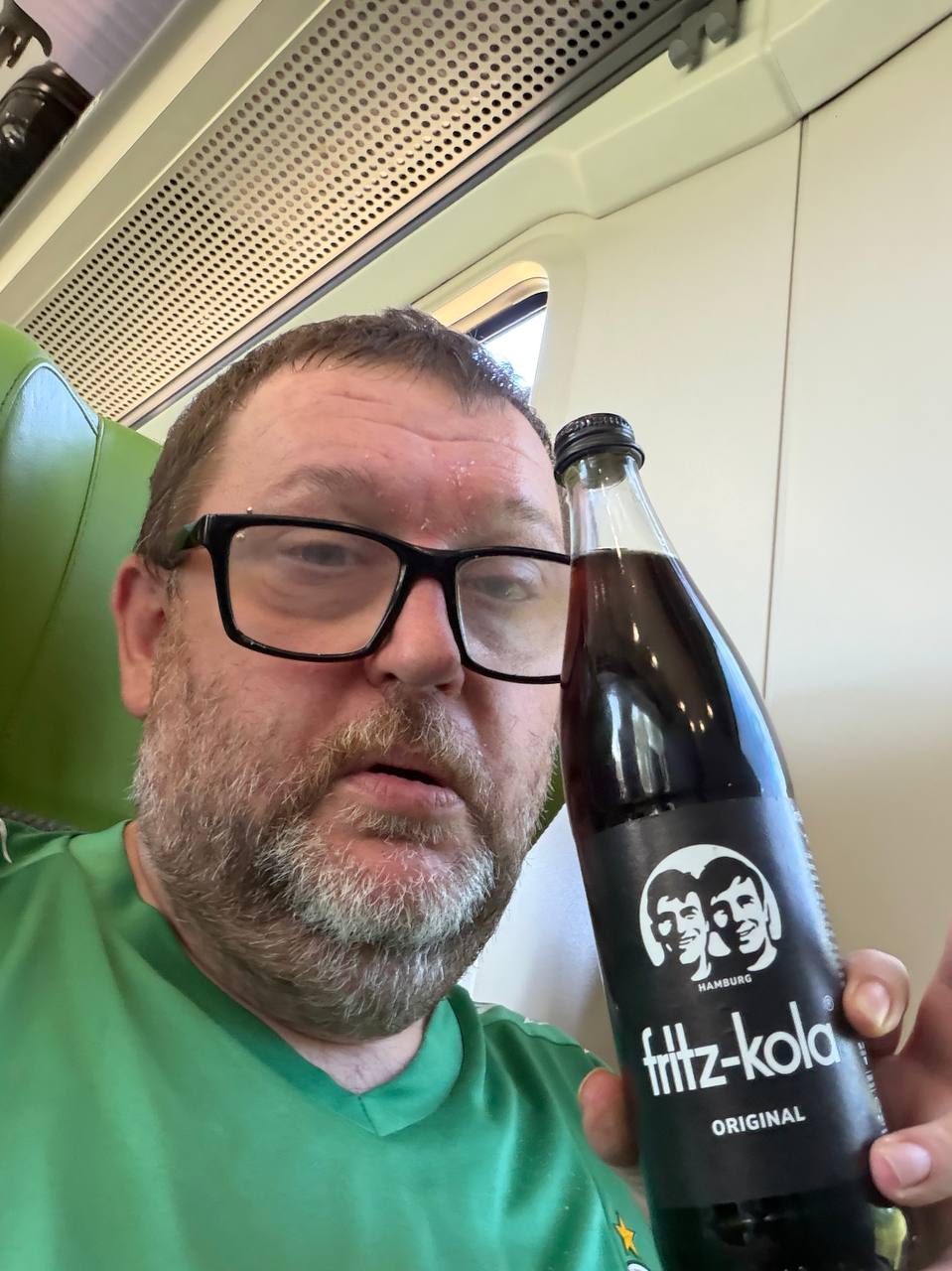
Fritz Kola is far from the best cola in Germany, but that is not to say it is bad either. It is more that the standard of cola in Germany is unusually high, and unlike many other countries, the category of craft and alternative colas is genuinely competitive.
So what is the deal with Fritz, and where does it sit in the wider competition?
Table of Contents
The Fritz Kola Story
Fritz Kola was founded in 2002 in Hamburg by two university students, Mirco Wolf Wiegert and Lorenz Hampl. The idea was to create a German alternative to the global cola giants, with a stronger caffeine content and a more independent branding approach.
The company quickly grew from a small local startup into a nationally recognised soft drink brand. It built its reputation through bars, clubs and nightlife venues rather than traditional supermarket dominance.
Over time, Fritz expanded beyond cola into a wider range of soft drinks including Fritz Limo, Fritz Spritz and other variants. Despite this expansion, Fritz Kola Original remains the flagship product.

Where You Can Get Fritz Kola
Fritz Kola is widely available across Germany and is especially common in cities like Berlin, Hamburg and Leipzig – you know the “cool” cities. It is heavily stocked in bars, clubs, kiosks, late-night shops and independent supermarkets.
It first became popular in the nightlife and hospitality scene, which is still where it is most visible, before expanding into mainstream retail.
Price of Fritz Kola (Germany)
- 0.33L glass bottle (supermarkets): €1.30 – €2.50
- 0.5L bottle (limited availability): €1.80 – €2.80
- Multipack (6 x 0.33L bottles): €6.99 – €9.99
- Bars / clubs (single mixer serve): €2.50 – €4.00
Prices vary depending on whether you are buying it in a supermarket, kiosk, or nightlife venue.

Photo: r/BuyFromEU
#ColaQuest Fritz Kola
So how does Fritz Kola taste? It is a fairly smooth cola with a clean profile that is less herbal than other German alternatives. It avoids the heavier botanical notes found in brands like Sinalco or Mio Mio and instead sits closer to a straightforward cola flavour.
On the downside, it can feel slightly lacking in punch compared to stronger competitors, and if left open too long it loses carbonation fairly quickly.
In terms of mixing with alcohol, Fritz Kola is clearly designed for that environment. It is extremely common in German bars and clubs, particularly in Berlin, where it is regularly used in long drinks and simple mixers. The high caffeine content also reinforces its nightlife reputation, at 25 mg per 100 ml.
I paired it with vodka and it did the job without issue. It also works well as a general mixer, even if it is less distinctive than other German colas.
Overall, it ranks below Vita Cola, Sinalco and Mio Mio for me. A steady Cola Quest score of 6.5/10. Drinkable, widely available, but not something I would actively seek out.
Click to see my tours to East Germany with YPT.