
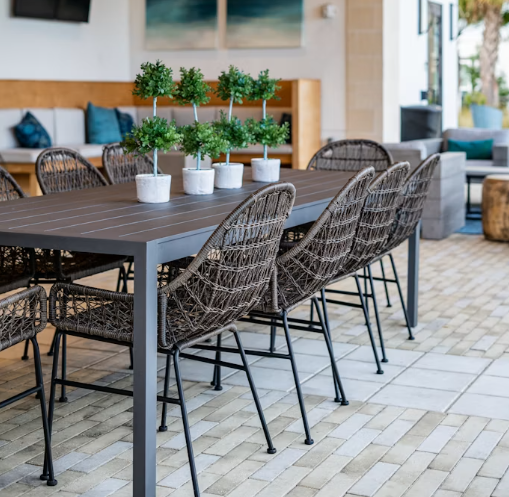
Stepping outside for a meal hits differently than eating indoors. The open air, the natural light, the sounds of the surrounding environment — these things work on you before the food even arrives, and restaurants that get this right tend to attract diners who stay longer, order more, and come back.
Outdoor dining has moved well past the folding-chair-on-a-sidewalk era. Today, patios are designed spaces with real thought behind them, and that investment pays off in ways that show up both in guest satisfaction and in the bottom line.
How Outdoor Patios Set the Mood Before the First Bite
The moment a diner steps onto a well-designed patio, something shifts. The air is different, the light is different, and the sense of routine that followed them out of the car starts to loosen. Indoor dining rooms are controlled environments, but they are also closed ones, and that subtle containment is something most people feel without being able to name it.
Natural light alone does a lot of the heavy lifting here. It makes food look better, makes people look better, and creates a relaxed physical ease that no amount of warm-toned Edison bulbs can fully replicate. You see, lighting designers can get close, but the real thing is still the real thing, and diners respond to it in ways that translate directly into longer, more enjoyable visits.
The team behind Boardwalk Kitchen & Bar has put it plainly: ambiance is the first course. By the time guests sit down and open a menu, the setting has already started shaping their expectations and their mood. A patio that feels thoughtfully put together tells the guest that the same care probably went into the kitchen.
The visual environment also does work that the menu cannot. Greenery, open sky, a view of water or a street worth watching — these elements give the eye somewhere to rest and the mind permission to slow down. Diners who feel genuinely relaxed tend to make more generous choices, linger over dessert, and leave with a better overall impression of the meal.
What Makes Outdoor Seating Feel Like an Escape
There is a reason people associate eating outside with vacations, celebrations, and days off. Physical separation from an enclosed space triggers something psychological, a sense that the normal rules of a rushed Tuesday do not quite apply out here. Restaurants that lean into this tend to build real loyalty, not just repeat visits.
Al fresco settings are inherently associated with leisure. People eat outside at beach bars, at mountain lodges, at European cafés, and they still talk about it years later. When a local restaurant manages to tap into that same feeling, even briefly, it earns a place in the diner’s mental category of places that are worth the trip.
Also, seasonal elements add sensory layers that no enclosed room can reproduce. A warm evening breeze, the smell of rain on pavement after a summer storm, the particular quality of golden-hour light in September — these things become part of the memory of the meal itself. Guests do not just remember what they ate; they remember how it felt to be there.
Even a routine weeknight dinner takes on a different character outside. The patio signals an occasion without demanding one, which is a rare quality. It gives people permission to treat an ordinary evening like something worth savoring, and that perception alone changes how they experience everything that follows.
The Social Dynamic Shifts Outside
Open layouts do something interesting to conversation. Without walls pressing in on all sides, people naturally spread out, settle in, and talk more freely. Groups that might feel mildly constrained at an indoor table tend to open up outside, and that shift in energy is noticeable to anyone paying attention.
The acoustic environment plays a big role in this. Loud, reverberant dining rooms are one of the most consistent complaints diners raise, and outdoor spaces simply do not have that problem. Sound disperses, voices stay at a natural level, and people can actually hear each other without leaning across the table. A conversation you can have comfortably is a conversation that keeps going.
You see, the physical configuration of outdoor seating also lends itself to stronger group dynamics. Side-by-side arrangements feel more natural outside, fire pit clusters encourage people to turn toward each other, and communal tables work better when there is enough space that no one feels crowded. The setting does a lot of the social work before anyone has said a word.
Longer stays follow from all of this almost automatically. When people are comfortable, engaged, and free from the low-level irritation of a too-loud room, they order another round and split one more dessert. That is good for the guest experience and good for the restaurant in equal measure.
How Design and Landscaping Shape the Experience
A patio that works is not just a parking lot with tables. The design choices behind a good outdoor space are the same ones that go into any well-considered room: lighting, materials, sightlines, proportion, and a sense of place that feels intentional rather than assembled from whatever was available. The difference is that, outside, those choices compete with the natural environment rather than define it.
Lighting is the element that gets the most visible return. String lights, lanterns, and candles transform a patio after dark, changing the entire character of the space. The warm glow creates intimacy at a scale that daytime seating does not always achieve, and it extends usable hours well into the evening without the flatness of overhead fluorescent lighting. Restaurants that get this right fill their patios on weeknights.
Greenery and natural materials do quiet but consistent work. Plants soften hard edges, wood and stone signal quality, and a water feature, even a modest one, gives the space a calming sensory layer that guests register without necessarily noticing. These elements make a patio feel like somewhere, rather than just somewhere to sit.
Also worth thinking about is the relationship between the indoor and outdoor spaces. When the design language carries through, when the materials and the mood feel connected, the guest experience feels cohesive rather than tacked on. A patio that looks like an afterthought tends to be treated like one. A patio that looks like it belongs is often chosen first.
Conclusion
Outdoor patios do more than add seats. They change the mood, shape the social dynamic, and give people a reason to choose one restaurant over another when everything else is roughly equal. The sensory experience of eating outside, the light, the air, the sense of space, works in a restaurant’s favor in ways that are hard to manufacture indoors.
The best patios are not accidents. They are the result of real decisions around design, comfort, and the kind of atmosphere that makes people want to stay. Restaurants willing to invest in that thinking tend to see it reflected in how their guests feel and how often they come back.