
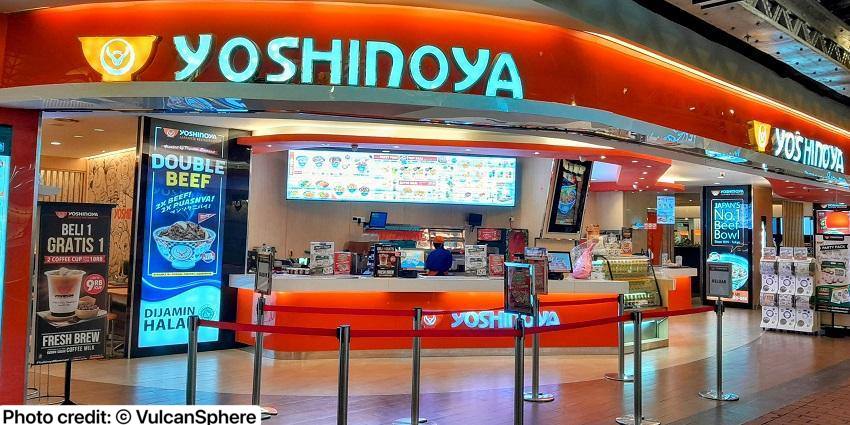
Even if you have not been to Japan there is a decent chance you have seen the Yoshinoya Restaurant chain, as they are in a bunch of countries across Asia, as well as even the United States.
This is because at least in my mind they are basically the McDonalds of rice and noodles. So, much like McDonalds having Yoshinoya does not mean you are having Japanese food.
It is for these reasons that I had never tried it. That was until today when I broke my Yoshinoya virginity.
Table of Contents
What the Yoshinoya?
Yoshinoya was founded in 1899 by Eikichi Matsuda, who opened a shop selling beef bowls at the fish market in Nihonbashi, Tokyo. The business moved to the Tsukiji fish market following the Great Kanto Earthquake of 1923, before eventually becoming the international fast-food chain it is today. Its speciality is gyudon, which is basically a bowl of rice topped with thinly sliced beef and onions in a sweet and savoury sauce.
The company expanded overseas, opening its first American restaurant in Denver in 1975 and moving into Asia in the late 1980s. The basic idea is simple: cheap easy Japanese type food.

Which countries have Yoshinoya and which do not?
Including Japan the franchise are in 11 different countries, generally the noodle and rice loving ones. Oh and America. Also in this list Hong Kong and Taiwan are countries – get over it.
According to Yoshinoya Holdings’ September 2026 figures, the chain has approximately 2,386 restaurants across these 11 countries and territories. Japan has the largest number, while mainland China is its biggest overseas market. Here is the breakdown:
Japan: 1,291 restaurants. The home of the brand and by far its biggest market.
Mainland China: 674 restaurants. This is a huge market for the company, with outlets across Beijing, Shanghai, Guangdong, Liaoning and numerous other provinces and regions.
Indonesia: 190 restaurants. Yoshinoya has built a substantial presence here, making Indonesia one of its biggest overseas markets.
United States: 100 restaurants. The chain has been operating in America since 1975, although it remains much less ubiquitous than McDonald’s.
Hong Kong: 54 restaurants. Beef bowls and other Japanese fast food are a familiar sight here.
Taiwan: 31 restaurants. Another market where Japanese food has long been popular.
Singapore: 16 restaurants. A smaller market, but one where the brand has established itself.
Thailand: 12 restaurants. Yoshinoya is competing in a country that already has a strong food culture of its own.
Philippines: 9 restaurants. A relatively small presence compared with some of its Asian neighbours.
Mongolia: 6 restaurants. Not perhaps the first country you would associate with Japanese fast food, but there you go.
Vietnam: 3 restaurants. The smallest market in this list according to the company’s latest figures.
As for where Yoshinoya does not exist, the answer is most of the world. There are no restaurants listed in the company’s current figures for Cambodia, Laos, Myanmar, Timor-Leste, Australia, the United Kingdom or most of Europe. So while Yoshinoya is international, it is hardly McDonald’s, or KFC in terms of global reach.
Click to see which countries have KFC.


The Menu at Yoshinoya Tokyo
Much like McDonalds the menu of Yoshinoya is pretty standard across the world. There are though cool nuances, such as the fact that they serve beer in Japan and it is a bit higher end than in other countries.
The main attraction is the gyudon, or beef bowl, but there is considerably more to the Japanese menu than just beef and rice. For me at least it is all about the Japanese curries.
Beef bowls (Gyudon)
- Small beef bowl: ¥465 (US$3.10)
- Regular beef bowl: ¥498 (US$3.30)
- Large beef bowl: ¥740 (US$4.95)
- Extra-large beef bowl: ¥938 (US$6.25)
- Super-sized beef bowl: ¥1,059 (US$7.05)
- Cheese beef bowl, regular: ¥660 (US$4.40)
- Kimchi beef bowl: prices vary by size and branch.
- Beef bowl with green onions and egg: prices vary by size and branch.
- Beef bowl with grated daikon and ponzu sauce: prices vary by size and branch.
Other rice bowls
- Pork bowl, regular: ¥465 (US$3.10)
- Pork bowl, large: ¥707 (US$4.70)
- Fried chicken rice bowls: generally around ¥600–900 (US$4–6), depending on size and toppings.
- Beef yakiniku bowls: prices vary by size and branch.
- Eel rice bowls: prices vary according to portion and seasonal availability.
- Beef and oil-noodle set: ¥950 (US$6.35) for the regular beef bowl and regular noodles.
Curry
- Black curry with cheese: ¥660 (US$4.40)
- Black curry with beef: ¥652 (US$4.35)
- Other curry variations include plain black curry and curry with fried chicken, depending on the branch.
Set meals
- Fried chicken set meal: around ¥844 (US$5.60).
- Larger fried chicken set meals: around ¥954–1,064 (US$6.35–7.10).
- Double set meals combining beef with pork or fried chicken: generally around ¥1,000–1,200 (US$6.65–8).
- Seasonal fish set meals: prices vary.
Seasonal specials
Yoshinoya also does limited-time dishes, which can include beef sukiyaki hot pots, grilled fish meals and other seasonal offerings. These are one of the reasons that the Japanese menu can be more interesting than you might expect from a fast-food chain.
Sides and extras
- Miso soup: around ¥110 (US$0.75).
- Salad: around ¥100–200 (US$0.65–1.35).
- Potato salad: around ¥130–200 (US$0.85–1.35).
- Kimchi: around ¥100–200 (US$0.65–1.35).
- Soft-boiled egg: around ¥110 (US$0.75).
- Extra cheese: around ¥110 (US$0.75).
- Extra beef: available for an additional charge.
Drinks
- Soft drinks: around ¥180–200 (US$1.20–1.35).
- Beer: available at participating Japanese restaurants, with prices varying by branch.
- Non-alcoholic beer: available at selected branches.
The big thing to remember is that Yoshinoya is not just a beef-bowl restaurant. You can get curry, pork, fried chicken, seasonal dishes and even noodles at selected locations. Menus though do vary.


How is Yoshinoya Tokyo?
OK, so it is actually surprisingly good in some ways! Every seat has an iPad that you can order food and drinks from and it is really quite nice and well, very Japanese. It is also quite well priced. I personally had a beef curry with triple cheese. Apparently that is a thing – although not necessarily 3 portions of cheese.
Overall it was pretty good and came at a decent price. In reality though and with hindsight I would have rather gone to a non-franchise fun place in Akasaka. So, is Yoshinoya shit? No, but honestly it is unlikely that I will be back.