
In the northernmost province of Bicol, the Pacific dictates everything: when the basnig boats leave at dusk, when the fish markets open before sunrise, and what ends up simmering in coconut milk and chili before noon.
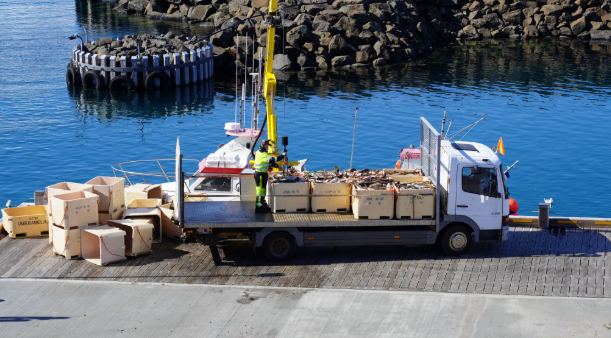
The Mercedes Fish Port is at its most alive before 6 a.m. By then, the basnig boats, the wide-hulled, light-equipped vessels that work the waters of San Miguel Bay and the Pacific coast through the night, have already returned with sardines, mackerel, anchovies, and whatever the gill nets brought in from the deeper water. The ice is going on the catch. The price call has begun. International visitors arriving in the Philippines to see any of this must first complete their etravel Philippines registration, the mandatory digital arrival card required of all foreign travelers entering the country, processed online before departure. The form takes minutes. What the port looks like at first light takes considerably longer to forget.
Camarines Norte, the northernmost province of the Bicol Region in northeastern Luzon, rewards the decision to travel beyond the more visited parts of Bicol. According to the Ultimate Guide to Camarines Norte published by 7641 Islands, the province sits at the intersection of the Pacific Ocean and the Philippine Sea, with San Miguel Bay to its south and an arc of island groups, surf beaches, and fishing communities that have sustained the same rhythms of catch, cook, and eat for generations. Fisheries contribute 21 percent of the Bicol Region’s total fish production. In Camarines Norte, the sea is not the background. It is the economy.
A Province Built Around the Catch
San Miguel Bay generates approximately 20,000 tons of fish annually, making it one of the most productive grounds in the entire Bicol Region. The waters yield sardines, anchovies, mackerel, scads, prawns, and blue crabs harvested for export to East Asia. The Pacific coast along the province’s eastern edge adds tuna, marlin, and the demersal fish that feed the daily markets in Daet and surrounding municipalities.
Mercedes, on the eastern coast, is the province’s fishing capital. Its fish port handles the bulk of commercial landings, serves as the embarkation point for the Seven Islands of Mercedes and the Siete Pecados marine sanctuary, and is one of the few places where the commercial and municipal fishing economies visibly overlap. The catch that will supply a Daet market stall and the crab bound for Hong Kong leave from the same concrete pier.
The Basnig, the Bagnet, and the Daily Rhythm

“Life here revolves around fishing, shrimping, and farming oysters and crab. Without even an access road, the only non-aquatic industries are a nearby watermelon farm and the occasional cluck and snuffle of chickens and pigs.” — Time magazine, on Barangay Sula, Vinzons, Camarines Norte, 2025
The basnig is the defining vessel of nighttime fishing in the bay, large and flat-hulled, rigged with powerful lights that draw fish to the surface in the darkness, working the deeper parts of San Miguel Bay during the southwest monsoon season. Alongside it, fishermen use gill nets, beach seines, bagnets, and handlines depending on species and weather. The handliners are often out for five or six hours before returning with whatever the line brought up.
In Barangay Sula, Vinzons, the fishing village occupies a sandbank barely 400 feet wide between the Pacific and a tidal mangrove network. The community farms oysters and crabs alongside open-water fishing, and dries shrimps and small fish on sea walls, rooftops, and road sections. Dried fish is not a product of necessity alone. It is a culinary tradition and a pantry staple appearing in home kitchens across Bicol from breakfast to sauce.
Coconut, Chili, and the Table
The fishing culture of Camarines Norte cannot be separated from Bicolano cuisine, which is inseparable from two fundamentals: coconut milk (gata) and chili (siling labuyo). Almost everything the sea produces eventually encounters one or both. Prawns simmer in gata with ginger. Crabs go into coconut cream with young shoots. The combinations can be genuinely intense. The Bicolano tolerance for spice is a regional point of pride, not an incidental characteristic.
Sinantolan, grated santol rind with chili in coconut cream, is the province’s signature preparation: bitter, spicy, and creamy in a combination entirely its own. The Philippine Department of Tourism has formally acknowledged Bicol’s spicy culinary identity in its Food and Gastronomy Tourism Strategic Framework and Roadmap 2024–2029, according to Tripzilla Philippines. The roadmap represents the first time the government has treated gastronomy as a central pillar of national tourism strategy, with regional identities, Bicol’s coconut and chili tradition among them, explicitly framed as draws.
Beyond the Port: The Islands That Come With the Catch
The same waters that supply the fish markets give Camarines Norte its most compelling travel experiences. The Seven Islands of Mercedes are accessible by banca from Mercedes Fish Port in under 30 minutes, including Canimog Island, site of the oldest lighthouse in Bicol, reef systems for snorkelers, and the Siete Pecados marine sanctuary, all accessible from the same departure point.
Calaguas Island in Vinzons draws visitors who want something more than the more visited Bicol coast. A two-hour boat ride from the jump-off at Vinzons, it arrives as powdery white sand backed by green hills with no permanent hotel infrastructure, camping tents, and hammocks, with the fishing community’s rhythms continuing around you. Bagasbas Beach in Daet operates at the other end: a surf beach with consistent Pacific swells, restaurants along the water, and easy access from the provincial capital.
Before You Go
All international visitors must complete the etravel Philippines digital arrival card before departure. Camarines Norte is approximately five to six hours from Manila by road, or accessible via domestic flight to Naga Airport, followed by a two-hour bus connection to Daet.
The basnig leaves at dusk and returns before the provincial capital wakes up. By 7 a.m., what it brought back is already on ice at the Mercedes port, already negotiated over, already on its way to a pot somewhere in Camarines Norte. The chain from the Pacific to the table takes less time than most people spend deciding where to have breakfast. That proximity between ocean and meal, between the work of fishing and the act of eating, is what the province offers travelers who arrive with enough time to notice it.