
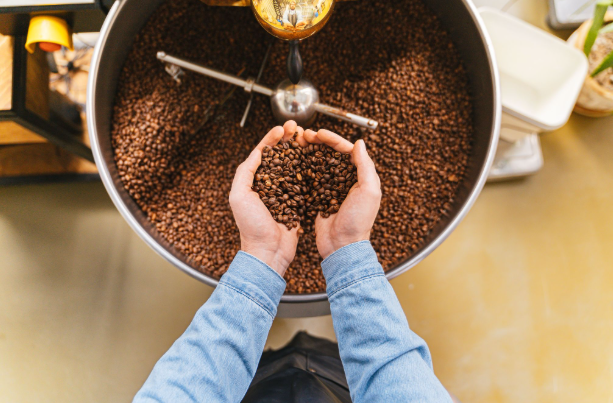
Brazil produces more coffee than any other country on Earth. For decades, the best of it has been left on container ships. The city of 20 million people that has always drunk it every day is now building a culture around it.
The menu at Coffee Lab in Vila Madalena lists each coffee by farm, altitude, processing method, and flavor notes, the same information you would find in a serious natural wine shop, applied to Brazilian single-origin filter coffees. Isabela Raposeiras, who founded the space in 2012 and was Brazil’s first national barista champion, built Coffee Lab as a café, a roastery, and a school, on the premise that the only way to change what a city drinks is to change what it knows. Visitors should check whether they need an Online Visa for Brazil before booking. The electronic visa covers most tourist arrivals and is processed online before departure. What they are arriving for, in São Paulo’s case, now includes a coffee scene that has been rewriting the terms of the category for more than a decade.
Brazil has always been the world’s largest coffee producer. What has changed, according to a May 2026 report by Perfect Daily Grind, is what happens to it at home. Specialty coffee consumption in Brazil grew 15 percent in 2025 alone. A USDA Foreign Agricultural Service report published in March 2026 confirmed strong growth in domestic appreciation of specialty coffee, with major cities São Paulo first among them, identified as the principal drivers of that shift. For more than two centuries, coffee shaped Brazil’s economy and national identity before it shaped its café culture. The gap is now closing.
What the Cafézinho Was — and Why It Mattered
The cafézinho is a cultural institution: a small, very dark, often pre-sweetened espresso served at padarias, lunch counters, and the end of every meal across the country. It is rooted in a period when the finest beans were exported, and the domestic market received the secondary harvest. Dark roasting covered defects; sugar was added because the bitterness required it. The result was a national drink that was functional, affordable, and social, and largely disconnected from the qualities that made Brazilian arabica sought after in Tokyo, Melbourne, and Copenhagen.
The Brazilian Specialty Coffee Association was founded in 1991 to challenge this model. The Cup of Excellence programme launched its first Brazil competition in 1999, beginning the process of certifying and publicly pricing the finest lots from Brazilian farms. The investment in quality at the farm level that followed created the raw material for what is now happening in São Paulo’s cafés: a supply chain capable of delivering distinguished single-origin coffee from a specific farm at a specific altitude in Minas Gerais or Sul de Minas, identifiable by name and lot number, to a brew bar in Pinheiros.
The Pioneers Who Built the Scene

“Over the last 15 to 20 years, specialty coffee has grown significantly in Brazil. Consumers increasingly care about origin, varieties, processing, and the sensory experience of coffee.” — Thiago Dias, fifth-generation coffee producer, Perfect Daily Grind, 2026
Coffee Lab under Raposeiras was not the only early anchor. Boram Um, the South Korean-born barista who won the World Barista Championship in 2022, opened Um Coffee Co. in São Paulo’s Bom Retiro neighborhood and made a specific choice: the café serves only coffee grown on his own farm. Every cup is farm-to-cup in the most literal sense. The approach has attracted a pilgrimage-level clientele from across the specialty coffee world and established São Paulo as a destination on the international barista circuit in a way that few Latin American cities have managed.
King of the Fork, in Pinheiros, merged the specialty coffee shop with cycling culture, a combination that has worked in Berlin and Portland and proves equally natural on the weekend streets of São Paulo’s creative neighborhoods. Pato Rei brought competition-level processing to a neighborhood café format, specializing in high-acidity, fermentation-forward coffees that represent the frontier of current specialty technique. Sensory Coffee focuses exclusively on Brazilian-grown beans and offers food pairings, such as coffee with cheese, coffee with cured meats, in the manner of a wine-tasting room. The shakarato, a chilled and aerated espresso served over ice, has become the city’s signature summer order in the same way the flat white colonized café menus in London a decade ago.
Vila Madalena, Pinheiros, and the Geography of the Scene
São Paulo’s specialty coffee geography is concentrated but walkable. Vila Madalena and Pinheiros, adjacent, bohemian, densely planted with street art and independent restaurants, form the undisputed center. The neighborhood streets between Rua Aspicuelta and the Benedito Calixto square in Pinheiros contain more specialty cafés per block than most Brazilian cities contain in total. The Avenida Paulista corridor, running through the financial district, has attracted a secondary cluster of urban café formats designed for professionals: Terra, with the longest coffee bar in the city and 88 seats, operates here as a high-speed specialty operation where quality and throughput are not treated as opposites.
The Festival That Made It Official
The fifth edition of the São Paulo Coffee Festival, held June 26 to 28 at the Bienal Pavilion in Ibirapuera Park, formalized what the neighborhood cafés had been building for years. Organized by Espresso&CO in partnership with Allegra Group, who also run the London Coffee Festival and equivalent events in Amsterdam, New York, Paris, and Milan, the 2026 edition brought together more than 150 brands and expected approximately 16,000 visitors over three days. According to event reporting from Comunicaffè, the festival hosted the 10th edition of the Barista Cup, with 20 competitors given 12 minutes to prepare a routine of filter coffees, espressos, and plant-milk cappuccinos, with the winner earning a place at the Fiamma World Barista Open in Portugal. The 2026 edition also hosted the debut of the Tiramisù World Cup Brazil, an espresso-dependent dessert competition reflecting how far São Paulo’s coffee culture has traveled in international terms.
Before You Go
Visitors to Brazil should confirm entry requirements before booking. An Online Visa for Brazil covers most tourist arrivals and is applied for online before departure. The specialty coffee neighborhoods of Vila Madalena and Pinheiros are accessible by metro from the city center (Fradique Coutinho station, Line 4) and are best explored on foot.
The cafézinho is not going anywhere. It is still the cup that ends the meal, that is offered at the hardware store, that costs less than a bus ticket. But beside it, in São Paulo in 2026, there is now a parallel conversation happening in cafés where the same bean, the same Brazilian arabica that leaves on container ships to be celebrated in Oslo and Seoul, is being examined, discussed, and argued over by the city that grew it. That conversation, once it starts, does not stop.