
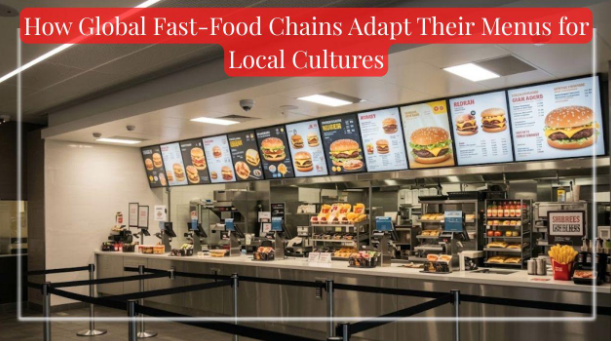
Walk into a KFC or McDonald’s abroad and something feels familiar. The logo, the counters, the smell of fried food. But look closer at the menu board and you will realize it is almost entirely different from what you would find back home.
That is not an accident. It is a deliberate strategy.
Global fast-food brands do not simply export their menus. They rebuild them from the ground up. They adapt to the religious rules, cultural tastes, and economic realities of every market they enter. What looks like global standardization is actually a sophisticated exercise in local reinvention.
Here is how it really works.
How Fast-Food Brands Engineer Value Through Bundle Pricing
In Western markets like the United States, fast-food chains have mastered one thing above all else. Making you feel like you are getting a deal.
Bundle pricing is the main tool for this. Rather than selling items individually, these brands create tiered meal packages at carefully spaced price points. Typically $7, $9, and $11. The gap between each tier is deliberately small, just $2. This nudges customers toward the higher-margin option without making it feel like a big jump.
A typical bundle ladder looks like this:
| Tier | Price | What You Get |
| Entry | $7 | Mini slider + 5 nuggets + side |
| Mid | $9 | Adds a second snacker for $2 more |
| Premium | $11 | Full-size Classic burger + tenders upgrade |
Each step up feels logical rather than expensive. Most customers naturally land on the mid or premium tier. That is exactly where the brand wants them. Compared to buying items separately, these bundles save the customer between $3 and $6. That perceived saving is the hook that makes the whole system work.
For a detailed breakdown of how KFC structures its box feast bundles, including what is included at each level and how portion sizes are scaled. Consumers looking to track portion scaling can evaluate these configurations using detailed analyses of fast-food box feast bundles to see exactly how franchise margins are protected.
When a Brand Enters a New Country (Everything Changes)
The bundle strategy works well where the primary challenge is price sensitivity. But when these same brands expand into religiously and culturally distinct markets, pricing becomes the least of their concerns.

Take Malaysia as a primary case study.
In Malaysia, halal compliance is not a niche concern. It governs the entire food industry. For a global fast-food chain to legally and ethically operate there, every single link in the supply chain must meet the standards set by JAKIM (Jabatan Kemajuan Islam Malaysia) under the MS1500:2009 certification framework.
This goes far beyond swapping out pork for chicken. True halal compliance at a corporate scale requires a complete operational overhaul across three areas:
- Sourcing: All animal products must come exclusively from JAKIM-approved suppliers with zero exceptions.
- Sealed logistics: Ingredients travel in dedicated sealed vehicles carrying only certified goods to prevent cross-contamination during transit.
- Condiment certification: Secondary inputs like chili pastes, tomato-based dipping sauces, and marinades must be processed in independently certified regional facilities before reaching any restaurant.
One uncertified supplier or one unsealed delivery vehicle is enough to invalidate the entire halal status of an outlet. This is why multinational brands treat JAKIM compliance as a deep structural commitment rather than a marketing label.
The Menu Itself Has to Change Too
Getting the supply chain right earns a brand the right to operate. But to connect with local customers, the food has to taste right to them.
Malaysian KFC menus reflect this clearly. Alongside the brand’s signature Original Recipe fried chicken, you will find items that would be completely unrecognizable on a US or UK menu board. Seasonal offerings like Ayam Riuh Rempah feature chicken marinated in a bold blend of traditional Malay spices and herbs. Limited-time desserts like Guava Asam Boi bring a tamarind-plum flavor rooted deeply in regional street food culture.
These are not gimmicks. They are the result of brands genuinely recognizing that local customers will consistently choose a familiar local flavor over a foreign one. Unless the brand makes the effort to meet them halfway.
To see exactly what KFC Malaysia currently serves, including its full lineup of localized items, rice-based meal sets, and regional pricing, the KFC Malaysia menu with current prices gives a fully updated breakdown of the real menu on the ground.
What Travelers Should Know Before They Order

Several factors quietly push costs above the standard menu rate.
Peninsular vs. East Malaysia:
Outlets in Sabah and Sarawak on the island of Borneo run noticeably higher prices than those on the Peninsula. Transport and logistics overheads across the South China Sea are the main reason.
Premium location surcharges:
Restaurants in high-footfall zones like Genting Highlands, major airport terminals, or large shopping mall food courts operate on custom pricing. Standard app promotions and flat-rate value deals typically do not apply in these locations.
The delivery app markup
Ordering through third-party platforms like GrabFood or Foodpanda adds commission fees that inflate the price of every item on the bill. The same meal ordered through KFC’s own app or picked up at the counter will almost always cost less.
Knowing this before you order can make a real difference, especially on a longer trip.
The Bigger Picture
It is easy to look at a KFC or McDonald’s abroad and assume you are getting the same product you would find at home. The reality is far more interesting than that.
Behind every localized menu is a genuine operational transformation. New supply chains, new halal certifications under JAKIM MS1500:2009, new regional recipes like Ayam Riuh Rempah, and entirely new pricing structures. All built from scratch to earn the trust of a specific local market.
International fast food is not proof that global brands are erasing local culture. If anything, it is proof of the opposite. Local culture is powerful enough to force billion-dollar corporations to completely reinvent themselves just to earn a seat at the table.